

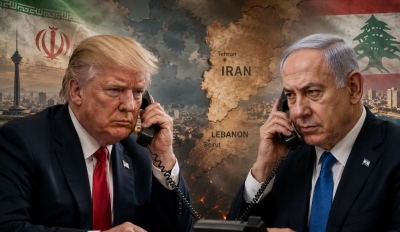
The impasse facing US President Donald Trump regarding the war he unleashed with Israel against Iran is growing day by day. An increasing number of analysts estimate that whatever the American president does, he will be defeated... whether there is a deal or not. The ambitious goals he set for regime change and the unconditional surrender of Iran have failed miserably... and for this reason, many are speaking of a humiliation for Trump and the US. Iran remains and will remain powerful, proving that the challenge it poses to the US far exceeds the presidential term of Trump. It is no coincidence that at a time when the Americans supposedly destroyed every Iranian missile and military capability, the Iranians have weapons to show, such as the Arash-e Kamangir system, which, as it turned out, is capable of spreading terror and putting to flight even the most modern and advanced American weapon systems, such as the F-35.
Huge challenge
For nearly five decades, American presidents from both parties—Democrats and Republicans—have approached Iran with different combinations of diplomacy, sanctions, deterrence, and military force. However, the conflict between the US and the Islamic Republic persists because the central engine of Iran’s behavior has remained remarkably stable: the revolutionary ideology of the Islamic Republic itself. The debate in Washington often focuses on tactics.
The 2 strategies
Democrats tend to prioritize diplomacy and cite President Barack Obama's 2015 nuclear deal with Tehran as the best available mechanism for limiting Iran’s nuclear ambitions and avoiding war. Republicans often advocate for "maximum pressure" campaigns and military deterrence, arguing that Iran exploits diplomatic agreements while continuing its regional aggression.
No solution
Both arguments, according to CNN, contain elements of truth. However, neither fully explains the continuation of the problem. The thread running through the case is not the changing political winds in Washington, but the timeless nature of the Iranian regime and the goals embedded in the Islamic Republic since 1979. Nothing that President Donald Trump is allegedly discussing now with Iran—a transactional deal for reopening the Strait of Hormuz and perhaps imposing new nuclear restrictions—would change the course that has remained steady for 47 years.
The revolution and influence in the Middle East
Iran’s constitution assigns the Islamic Revolutionary Guard Corps, or IRGC, not just a defensive military role, but what it calls an "ideological jihad mission in the path of God." For decades, Iran’s revolutionary leadership has interpreted this mission as expanding Iranian influence across the Middle East, expelling the US from the region, and supporting armed movements committed to the destruction of Israel. These goals have transcended American and Iranian presidents, economic crises, sanctions campaigns, and diplomatic openings. They explain the pattern of attacks, hostage-taking, terrorism, and proxy warfare that has defined Iran's relationship with the US since the 1979 seizure of the American embassy in Tehran. They also explain Iran’s enduring investment in militant organizations throughout the region, including Hezbollah, Hamas, Palestinian Islamic Jihad, Iraqi militias, and the Houthis.
The role of the IRGC
The IRGC was designed specifically to protect the revolution at home and promote it abroad. Its expeditionary arm, the Quds Force, spent decades building networks of armed partners capable of projecting Iranian influence far beyond Iran's borders. At various times, American policymakers hoped that Iran’s revolutionary zeal could be moderated in exchange for economic opportunities and reintegration into the international system. This hope was part of the strategic logic behind the Obama administration's nuclear deal.
No change even with the... Obama achievement
The JCPOA—the Obama agreement—imposed substantive restrictions on Iran’s nuclear program for a time and, in that sense, was an achievement. However, it did not change Iran’s regional behavior or its revolutionary goals. In some respects, Tehran—bolstered by new economic resources—subsequently appeared even more confident. Shortly after the agreement was finalized, Supreme Leader Ali Khamenei rejected suggestions that Iran’s stance toward Israel or the US would soften. He publicly predicted that Israel would not exist within 25 years and promised continued resistance throughout the region. This position was not rhetorical theater. It aligned with the path Iran had been following for decades.
October 7 as a culmination
October 7, 2023, was the clearest manifestation of this path to date. Hamas—equipped, funded, and supported by Iran for many years—launched the deadliest attack in Israel’s history, killing more than 1,200 people and taking over 250 hostages. Most governments in the world condemned the atrocities. Conversely, Iran’s leadership celebrated them and described them as resistance against Israel. Within a few days, groups supported by Iran across the region joined the conflict.
Ignition everywhere
Hezbollah began firing rockets from Lebanon toward northern Israel. Iranian-backed militias in Iraq and Syria launched repeated attacks against American forces. The Houthis in Yemen began targeting commercial shipping and American naval assets in the Red Sea. All of this reflected decades of Iranian investment in a network designed for exactly this purpose: exerting pressure against Israel and the US on multiple fronts while maintaining varying degrees of plausible deniability. Iran ultimately launched two unprecedented direct attacks with missiles and drones against Israel from Iranian soil itself—before Israel struck Iran directly.
Trump first
Trump is the first president to directly target the top Iranian military leadership and later authorize military operations within Iranian territory itself. Some of these actions produced tangible tactical results. The killing of Quds Force commander Qassem Soleimani in 2020 disrupted Iran’s regional operations. Subsequent strikes against Iranian military infrastructure and nuclear facilities significantly degraded parts of Iran’s missile, drone, and nuclear programs. But tactical military success alone does not produce strategic results.
The limits of military power
Indeed, the events of recent months have highlighted the limits of military power when facing a deeply entrenched revolutionary system. Although it has taken hits, Iran’s system appears to have rallied, with leading roles for hardline ideologues like Ahmad Vahedi, the new leader of the IRGC—who led the Quds Force for much of the 1980s and 1990s. American tactics—military, diplomatic, economic—can be effective in degrading Iranian capabilities, but they have proven completely ineffective in changing the ideological course of the Iranian regime itself.
No end on the horizon
Even with rumors of an impending deal, Iran’s new supreme leader has insisted on his late father's goals to expel America from the Middle East and eliminate the state of Israel. "From now on," he wrote this week, "Death to America and Death to Israel will be the common slogans of the Islamic Ummah." To leave no doubt, he reiterated his late father's vow to see Israel disappear by 2040, a threat that Israel has no choice but to take seriously.
Israel's security doctrine does not change
Israel, for its part, may get a new government after elections later this year, but its more proactive security doctrine after October 7 is unlikely to change. It will act against threats as they arise, whether near its borders or within Iran itself, including against Iran's missile program. The United States will also act to defend itself and its interests. This week, even as Washington and Tehran negotiated the reopening of the Strait of Hormuz, the IRGC was spotted laying new mines in the Strait—leading to a military exchange of fire.
Constant challenge
This reality—Iran’s defining ideology, Israel’s tendency to act against perceived threats, and the protection of America’s own interests and personnel—will create constant challenges for Trump and his successor. Until—potentially—there is political change in Iran, those in the West must expect a recurring cycle of confrontation, temporary de-escalation, and renewed confrontation.
Show of force
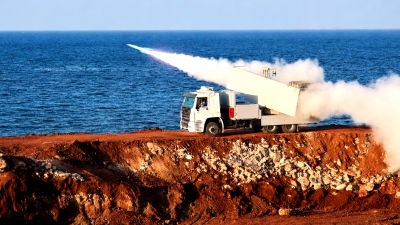
Beyond the ideological background, however, Iran also possesses a very powerful military... machine. It is significant that Iran announced it used a new anti-aircraft defense system to shoot down a US MQ-9 Reaper drone near the Strait of Hormuz earlier this week, an incident that, according to analysts, shows that Tehran has maintained its ability to fend off American and Israeli attacks, despite months of strikes on its military facilities. Iranian media reported that the drone was shot down near Qeshm Island, in the Strait of Hormuz, adding that the interception marked the first operational use of a locally developed system called Arash-e Kamangir.
Iran endures
There is no independent confirmation of Iran’s claim about a new interception system. The loss of a US drone near one of the world’s most sensitive maritime routes comes as the US reportedly carried out new strikes on an Iranian military facility near Bandar Abbas. Iran’s Revolutionary Guard, the IRGC, later announced that they attacked an "American airbase" in retaliation. As tensions between Iran and the US continue to rise, despite a fragile ceasefire, Tehran’s claim that it intercepted an American drone has renewed questions about how much of Iran’s anti-aircraft capability survived months of Israeli and American strikes—and whether Iran retains the resilience to withstand a new round of attacks, should negotiations collapse.
Detects stealth targets
Iran’s semi-official Fars news agency reported that the Arash-e Kamangir system was used to intercept a "hostile" reconnaissance drone over the Strait of Hormuz. It described the system as capable of detecting stealth targets, but provided few technical details. Iranian media reported that it was a warning to hostile aircraft operating near Iranian airspace and maritime borders, especially at a time when Iran seeks to leverage its partial control of the Strait in any ceasefire negotiations with the US.
"This operation, which was carried out using a system with stealth capabilities, constitutes a clear and decisive message from Iran," Fars reported, citing anonymous officials. The new interception system announced by Fars is named after the hero of Persian mythology, who in folklore is described as the one who shot an arrow to mark the border between Iran and Central Asia. More generally, Arash is honored in poems and other literary works as a hero who helped Iran fight foreign domination.
How credible is Iran's claim?
The claim should be treated with caution, analysts say. Iranian officials have a long history of publicizing military achievements that are difficult to verify independently. However, experts also say the general idea behind the claim is plausible, as Iran has invested heavily in cheaper, mobile, and domestically produced defensive systems designed to threaten drones and aircraft without relying on large fixed radar installations, which are easier to locate.
Mark Hilborne, a senior lecturer at the School of Security Studies at King’s College London, told Al Jazeera that although there is "very little independently verified information" about the Arash-e Kamangir, the attack would "fit a broader pattern." "Iran has become quite self-sufficient in various forms of missile design and has appeared clever in changing the economy of war. Cheap, simple systems can put much more complex systems at risk." The reported downing of the Reaper drone could also force the US to rely more on expensive missiles than on drones when attacking Iran. Meanwhile, Tehran may continue to use the relatively cheap-to-produce Shahed drones, which may offer it a long-term economic advantage in any protracted conflict.
What could the Arash-e Kamangir be?
Analysts who spoke to Al Jazeera said the interception by the Arash-e Kamangir may not be so much a revolutionary new weapon as one more step in Iran’s broader shift toward mobile, lower-cost anti-aircraft defense. Alex Almeida, a security analyst at Horizon Engage, a New York-based strategic intelligence platform, told Al Jazeera that the system may be related to other Iranian short-range systems or loitering ground-to-air weapons. "I suspect it is a further development of one of these systems," he said. "It doesn't rely on fixed guidance from a traditional anti-aircraft radar point. It likely uses some kind of electro-optical or heat-seeking guidance—essentially a pop-up SAM (surface-to-air missile) system, which is easy to set up and launch."
Cheap and flexible
This matters because traditional anti-aircraft defense networks rely on radar and launch batteries that are much easier to locate, while cheap and smaller systems can be moved, hidden, launched quickly, and replaced more easily. Some of these systems are designed so that the interceptor can wait in the air, circling a section of the sky until a target drone or aircraft appears. Others are short-range anti-drone or anti-aircraft weapons, which are cheaper and less sophisticated than large anti-aircraft defense batteries, but are also easier to manufacture and replace.
This makes drones like the MQ-9 Reaper—designed to move slowly because their main purpose is surveillance—particularly vulnerable. Nicole Grajewski, an assistant professor at Sciences Po university in Paris, said Tehran may still need stronger medium and long-range anti-aircraft defense, but added that mobile systems have a clear benefit. "Their value is that you can move them quickly," she said. "They are mobile launch systems, in some cases man-portable. We don't know how high the Reaper was flying. Based on the released video, it may have been relatively easy to shoot down, but it still shows they retain some residual anti-aircraft capability."
Why does it matter?
Iran’s largest anti-aircraft defense network has suffered severe damage. It had been built around older radar-guided surface-to-air missile systems, including domestically produced batteries and Russian-origin missile defense systems, such as the S-300. It is widely believed that Israeli and American strikes have degraded much of this network. However, the new interception system suggests that Iran still appears to possess such systems, which allow for a "persistent, limited, low-level air threat" that is difficult to suppress permanently, Almeida said. These systems may not be able to stop a large air campaign or shoot down advanced fighters in significant numbers, but they can force the US and Israel to rely more on expensive weapons, launched from a greater distance. Grajewski said Iran’s military strategy is based on endurance rather than technological parity.
Betting on endurance
"Their systems are not particularly sophisticated or fully integrated, but as a result, Iran’s military strategy focuses heavily on resilience, endurance, and mobility," she said. This resilience also has strategic consequences. If the US or Israel cannot permanently eliminate Iran’s ability to respond, each new attack carries the risk of another round of escalation in the Persian Gulf or greater disruption to the Strait of Hormuz, resulting in a spike in fuel prices in the US.
"I wouldn't say Iran is as worried as the US and Israel," Grajewski said. "I believe the US exaggerated and presented as greater the success of these operations… and Israel and the US have limitations on ammunition. Iran has a significant defense industry and, after the 12-day war of June 2025, it was able to increase ballistic missile production to levels that are high by international standards. Iran also maintains an asymmetric advantage and, in some ways, the US and Israel are more constrained than Iran," she added.
She said Iran’s approach to anti-aircraft defense is less about maintaining a sophisticated integrated network and more about creating systems designed around "resilience, endurance, and mobility." "One issue with Western discussions about the performance of Iran’s missiles is that analysts often judge them according to Western doctrines and expectations, saying they are inaccurate or ineffective. But from Iran’s perspective, operating against a much superior opponent, I would say they actually exceeded their own expectations."
www.bankingnews.gr







Σχόλια αναγνωστών